
Vinblastine Sulfate
If you find any inaccurate information, please let us know by providing your feedback here
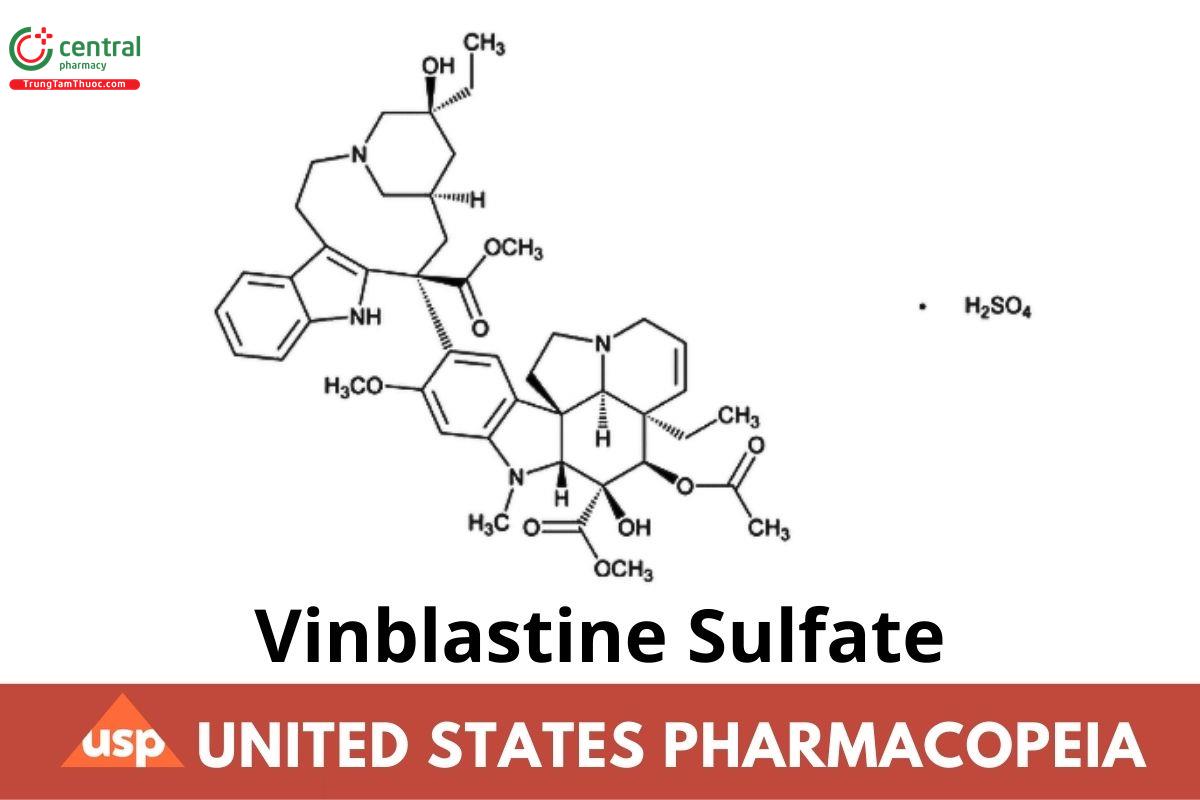

This article is compiled based on the United States Pharmacopeia (USP) – 2025 Edition
Issued and maintained by the United States Pharmacopeial Convention (USP)
C₄₆H₅₈N₄O₉ · H₂SO₄ 909.06
Vincaleukoblastine, sulfate (1:1) (salt);
Vincaleukoblastine sulfate (1:1) (salt) CAS RN®: 143-67-9; UNII: N00W22YO2B.
1 DEFINITION
Vinblastine Sulfate contains NLT 96.0% and NMT 102.0% of vinblastine sulfate (C₄₆H₅₈N₄O₉ · H₂SO₄), corrections being applied for loss in weight.
[Caution-Handle vinblastine sulfate with great care, because it is a potent cytotoxic agent.]
2 IDENTIFICATION
Change to read:
2.1 A. Spectroscopic Identification Tests 〈197〉, Infrared Spectroscopy: 197K or 197A
Analysis: The sample specimen and Reference Standard are previously dried under vacuum at 60° for 16 h.
Acceptance criteria: Meets the requirements of 197K or 197A
2.2 B. Identification Tests-General 〈191〉, Chemical Identification Tests, Sulfate
Sample: 10 mg/mL in water
Acceptance criteria: Meets the requirements
2.3 C. The retention time of the major peak of the Sample solution corresponds to that of the Standard solution, as obtained in the Assay.
3 ASSAY
Change to read:
3.1 Procedure
Solution A: Diethylamine and water (14:986). Adjust with phosphoric acid to a pH of 7.5.
Solution B: Acetonitrile and methanol (20:80)
Mobile phase: Solution A and Solution B (38:62)
Standard solution: 0.4 mg/mL of USP Vinblastine Sulfate RS in water
System suitability solution: 0.4 mg/mL of USP Vincristine Sulfate RS in Standard solution. [Note-No loss on drying determination is needed for USP Vincristine Sulfate RS.]
Sample solution: 0.4 mg/mL of Vinblastine Sulfate in water. Equilibrate a portion of Vinblastine Sulfate for 30 min in ambient humidity. Using another portion of the equilibrated specimen, determine the loss on drying.
Chromatographic system
- (See Chromatography 〈621〉, System Suitability.)
- Mode: LC
- Detector: UV 262 nm
- Columns
- Precolumn: Packed with porous silica gel; installed between the pump and the injector
- Analytical: 4.6-mm × 15-cm; 5-µm packing L1
- Flow rate: 2 mL/min
- Injection volume: 20 µL
System suitability
- Samples: Standard solution and System suitability solution
- Suitability requirements
- Resolution: NLT 4.0 between vincristine and vinblastine, System suitability solution
- Relative standard deviation: NMT 0.73%, Standard solution
Analysis
Samples: Standard solution and Sample solution
Calculate the percentage of vinblastine sulfate (C₄₆H₅₈N₄O₉ · H₂SO₄) in the portion of Vinblastine Sulfate taken:
Result = (rᵤ/rₛ) × (Cₛ/Cᵤ) × 100
rᵤ = peak response of vinblastine from the Sample solution
rₛ = peak response of vinblastine from the Standard solution
Cₛ = concentration of USP Vinblastine Sulfate RS in the Standard solution (mg/mL)
Cᵤ = concentration of Vinblastine Sulfate in the Sample solution (mg/mL)
Acceptance criteria: 96.0%–102.0%, corrections being applied for loss in weight
4 IMPURITIES
4.1 Organic Impurities
Mobile phase, Standard solution, System suitability solution, and System suitability: Proceed as directed in the Assay.
Sample solution A: Use the Sample solution prepared as directed in the Assay.
Sample solution B: 16 µg/mL of Vinblastine Sulfate in water from Sample solution A
Chromatographic system
- (See Chromatography 〈621〉, System Suitability.)
- Mode: LC
- Detector: UV 262 nm
- Columns
- Precolumn: Packed with porous silica gel; installed between the pump and the injector
- Analytical: 4.6-mm × 15-cm; 5-µm packing L1
- Flow rate: 2 mL/min
- Injection volume: 200 µL (20 µL for System suitability)
Analysis
Samples: Sample solution A and Sample solution B
Calculate the percentage of each individual impurity in the portion of Vinblastine Sulfate taken:
Result = [rUA/(ΣrUA+ 25rUB)] × 100
rUA = peak response of each individual impurity appearing after the solvent peak from Sample solution A
rUB = peak response of vinblastine from Sample solution B
Calculate the percentage of total impurities:
Result = [ΣrUA/(ΣrUA + 25rUB)] × 100
rUA = peak response of each individual impurity appearing after the solvent peak from Sample solution A
rUB = peak response of vinblastine from Sample solution B
Acceptance criteria
- Individual impurities: NMT 1.0%
- Total impurities: NMT 3.0%
5 SPECIFIC TESTS
5.1 pH 〈791〉
Sample: 1.5 mg/mL in water
Acceptance criteria: 3.5–5.0
5.2 Loss on Drying
(See Thermal Analysis 〈891〉.)
[Note-In this procedure, perform weighings rapidly with minimum exposure of the substances to air.]
Sample: 10 mg
Analysis: Determine the percentage of volatile substances by thermogravimetric analysis on an appropriately calibrated instrument. Heat the Sample at the rate of 5°/min between ambient temperature and 200° in an atmosphere of nitrogen at a flow rate of 40 mL/min. From the thermogram, determine the accumulated loss in weight between ambient temperature and a point on the plateau before decomposition is indicated (about 160°).
Acceptance criteria: It loses NMT 15.0% of its weight.
5.3 Sterility Tests 〈71〉
Where the label states that Vinblastine Sulfate is sterile, it meets the requirements.
5.4 Bacterial Endotoxins Test 〈85〉
Where the label states that Vinblastine Sulfate is sterile or must be subjected to further processing during the preparation of injectable dosage forms, it contains NMT 10.0 USP Endotoxin Units/mg of vinblastine sulfate.
6 ADDITIONAL REQUIREMENTS
Packaging and Storage: Preserve in tight, light-resistant containers, and store in a freezer.
Labeling: Where it is intended for use in preparing injectable dosage forms, the label states that it is sterile or must be subjected to further processing during the preparation of injectable dosage forms.
Change to read:
USP Reference Standards 〈11〉
USP Vinblastine Sulfate RS
USP Vincristine Sulfate RS
[Note-No loss on drying determination is needed for USP Vincristine Sulfate RS.]

