
Octyldodecanol
If you find any inaccurate information, please let us know by providing your feedback here
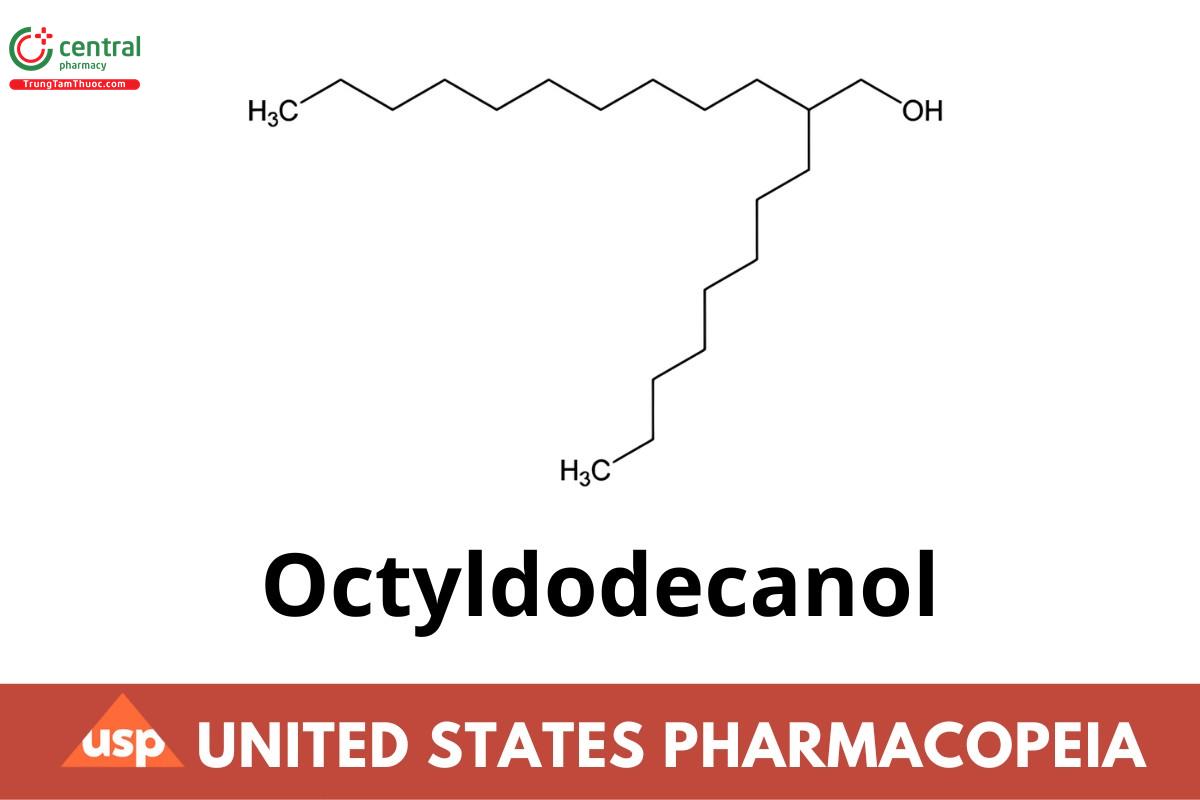

This article is compiled based on the United States Pharmacopeia (USP) – 2025 Edition
Issued and maintained by the United States Pharmacopeial Convention (USP)
C20H42O 298.55
1-Dodecanol, 2-octyl-;
2-Octyldodecan-1-ol;
2-Octyldodecanol;
2-Octyldodecyl alcohol CAS RN: 5333-42-6.
1 DEFINITION
the remai Octyldodecanol contains NLT 90.0% and NMT 102.0% of 2-octyldodecan-1-ol (C20H42O), the remainder consisting chiefly of related alcohols. It is obtained from sources of vegetable, animal, or synthetic origin.
2 IDENTIFICATION
A. CHROMATOGRAPHIC IDENTITY
Analysis: Proceed as directed in the Assay.
Acceptance criteria: The retention time of the major peak of the Sample solution, excluding the solvent and internal standard peaks, corresponds to the octyldodecanol peak of the Standard solution.
B. FATS AND FIXED OILS (401), Procedures, Hydroxyl Value: 175-190
3 ASSAY
3.1 PROCEDURE
Internal standard solution: 1 mg/mL of 1-pentadecanol (internal standard) in ethanol
System suitability solution: Prepare 1 mg/mL each of USP Cetyl Alcohol RS, USP Stearyl Alcohol RS, and USP Oleyl Alcohol RS in Internal standard solution, and heat the solution in a sealed container in a 50° water bath until all fatty alcohols are dissolved. Allow the solution to cool to room temperature, and mix well.
Standard solution: Prepare 1.0 mg/mL of USP Octyldodecanol RS in Internal standard solution.
Sample solution: Prepare 1.0 mg/mL of Octyldodecanol in Internal standard solution.
3.2 Chromatographic system
(See Chromatography (621), System Suitability.)
Mode: GC
Detector: Flame ionization
Column: 0.25-mm x 30-m fused-silica capillary, coated with a 0.25-µm layer of phase G7
Temperatures
Injection port: 270°
Detector: 280°
Column: See Table 1.
Table 1
| Initial Temperature (°) | Temperature Ramp (°/min) | Final Temperature (°) | Hold Time at Final Temperature (min) |
| 60 | 20 | 180 | — |
| 180 | 10 | 220 | 5 |
Carrier gas: Hydrogen
Flow rate: 2.0 mL/min, constant flow mode
Injection volume: 1 µL
Injection type: Split ratio, 100:1
Liner: Single taper, low-pressure drop liner with deactivated wool
Run time: 15 min
3.3 System suitability
Samples: System suitability solution and Standard solution
[NOTE-See Table 2 for the relative retention times.]
Table 2
| Component | Relative Retention Time |
| 1-Pentadecanol (internal standard) | 1.00 |
| Cetyl alcohol | 1.08 |
| Stearyl alcohol | 1.25 |
| Oleyl alcohol | 1.27 |
| Octyldodecanol | 1.32 |
Suitability requirements
Resolution: NLT 10 between the cetyl alcohol and stearyl alcohol peaks; NLT 2.0 between the stearyl alcohol and oleyl alcohol peaks, System suitability solution
Tailing factor: 0.8-1.8 for the octyldodecanol and 1-pentadecanol peaks, Standard solution
Relative standard deviation: NMT 1%, using the area ratio of octyldodecanol to 1-pentadecanol, Standard solution
3.4 Analysis
Samples: Standard solution and Sample solution
Calculate the percentage of octyldodecanol (C20H42O ) in the portion of Octyldodecanol taken:
Result = (RU/RS) x (CS/CU) x 100
RU = peak response ratio of octyldodecanol to the internal standard (peak response of octyldodecanol/peak response of the internal standard) from the Sample solution
RS = peak response ratio of octyldodecanol to the internal standard (peak response of octyldodecanol/peak response of the internal standard) from the Standard solution
CS = concentration of USP Octyldodecanol RS in the Standard solution (mg/mL)
CU = concentration of Octyldodecanol in the Sample solution (mg/mL)
Acceptance criteria: 90.0%-102.0%
4 IMPURITIES
[NOTE-On the basis of the manufacturing route, perform either Organic Impurity Test 1 or Organic Impurity Test 2.]
4.1 RESIDUE ON IGNITION (281)
NMT 0.1%, determined on 2 g
4.2 ORGANIC IMPURITY TEST 1: LIMIT OF RELATED FATTY ALCOHOLS AND ALKANES
System suitability solution: Prepare 1 mg/mL each of USP Stearyl Alcohol RS, USP Oleyl Alcohol RS, USP Linoleyl Alcohol RS, and USP Octyldodecanol RS in ethanol, and heat the solution in a sealed container in a 50° water bath until all fatty alcohols are dissolved. Allow the solution to cool to room temperature, and mix well. Dilute the solution with Ethanol to obtain a solution containing 0.05 mg/mL each of USP Stearyl Alcohol RS, USP Oleyl Alcohol RS, USP Linoleyl Alcohol RS, and USP Octyldodecanol RS.
Sample solution: 1 mg/mL of Octyldodecanol in ethanol
Chromatographic system: Proceed as directed in the Assay, except use split injection with a split ratio of 5:1.
System suitability
Samples: System suitability solution and Sample solution
[NOTE-See Table 3 for the relative retention times.]
Table 3
| Component | Relative Retention Time |
| n-Nonadecanea | 0.63 |
| 9-Methyl nonadecanea | 0.65 |
| 2-Octyl-1-decanol or 2-hexyl-1-dodecanolb | 0.87 |
| Stearyl alcoholc | 0.95 |
| Oleyl alcoholc | 0.96 |
| Linoleyl alcoholc | 0.99 |
| Octyldodecanold | 1.00 |
| 2-Octyl-1-tetradecanol or 2-decyl-1-dodecanolb | 1.17 |
| Any other unspecied related fatty alcohol or impurity | — |
a Alkane.
b Related branched chain fatty alcohol.
c Related linear chain fatty alcohol.
d Sample.
Suitability requirements
Resolution: NLT 2.0 between the stearyl alcohol and oleyl alcohol peaks; NLT 2.0 between the linoleyl alcohol and octyldodecanol peaks, System suitability solution
Analysis
Samples: System suitability solution and Sample solution
Identify n-nonadecane, 9-methyl nonadecane, and each of the linear chain fatty alcohols and branched chain fatty alcohols in the Sample solution according to Table 3.
Calculate the percentage of n-nonadecane (9-methyl nonadecane, each of the linear chain fatty alcohols and branched chain fatty alcohols, or any other unspecified related fatty alcohol or impurity) in the portion of Octyldodecanol taken:
Result = (rU/rT) x 100
rU = peak response of n-nonadecane (9-methyl nonadecane, each of the linear chain fatty alcohols and branched chain fatty alcohols, or any other unspecified related fatty alcohol or impurity) from the Sample solution
rT = sum of all the peak responses, excluding peak responses due to solvent, from the Sample solution
Acceptance criteria: Disregard any unspecified peaks that are less than 0.05%, and any peaks due to solvent.
Sum of unspecified related fatty alcohols and impurities: NMT 1%
Sum of n-nonadecane, 9-methyl nonadecane, 2-octyl-1-decanol, 2-hexyl-1-dodecanol, 2-octyl-1-tetradecanol, and 2-decyl-1-dodecanol: NMT 1.5%
4.3 ORGANIC IMPURITY TEST 2: LIMIT OF BRANCHED CHAIN FATTY ALCOHOLS AND BRANCHED CHAIN ALDEHYDE
System suitability solution: Prepare 1 mg/mL each of USP Stearyl Alcohol RS, USP Oleyl Alcohol RS, USP Linoleyl Alcohol RS, and USP Octyldodecanol RS in ethanol, and heat the solution in a sealed container in a 50° water bath until all fatty alcohols are dissolved. Allow the solution to cool to room temperature, and mix well. Dilute the solution with ethanol to obtain a solution containing 0.05 mg/mL each of USP Stearyl Alcohol RS, USP Oleyl Alcohol RS, USP Linoleyl Alcohol RS, and USP Octyldodecanol RS.
Sample solution: 1 mg/mL of Octyldodecanol in ethanol
Chromatographic system: Proceed as directed in the Assay, except use split injection with a split ratio of 5:1 and run time of 30 min.
System suitability
Samples: System suitability solution and Sample solution
[NOTE-See Table 4 for the relative retention times for branched chain fatty alcohols and branched chain aldehyde.]
Table 4
| Component | Relative Retention Time |
| 2-Octyl-1-decanol or 2-hexyl-1-dodecanola | 0.87 |
| 2-Octyldodecanalb | 0.93 |
| Stearyl alcoholc | 0.95 |
| Oleyl alcoholc | 0.96 |
| Linoleyl alcoholc | 0.99 |
| Octyldodecanold | 1.00 |
| 2-Octyl-1-tetradecanol or 2-decyl-1-dodecanola | 1.17 |
| Any other unspecied fatty alcohol or impurity | — |
a Related branched chain fatty alcohol.
b Branched aldehyde.
c Related linear chain fatty alcohol.
d Sample.
Suitability requirements
Resolution: NLT 2.0 between the stearyl alcohol and oleyl alcohol peaks; NLT 2.0 between the linoleyl alcohol and octyldodecanol peaks,
System suitability solution
Analysis
Samples: System suitability solution and Sample solution
Identify each branched chain fatty alcohol peak and branched chain aldehyde peak in the Sample solution according to Table 4. Calculate the percentage of each branched chain fatty alcohol (2-octyl-1-decanol, 2-hexyl-1-dodecanol, 2-octyl-1-tetradecanol, or 2-decyl-1-dodecanol), branched chain aldehyde (2-octyldodecanal), or any unspecified fatty alcohol or impurity in the portion of Octyldodecanol taken:
Result = (rU/rT) × 100
rU = peak response of each branched chain fatty alcohol (2-octyl-1-decanol, 2-hexyl-1-dodecanol, 2-octyl-1-tetradecanol, or 2-decyl-1-dodecanol), branched chain aldehyde (2-octyldodecanal), or any unspecified fatty alcohol or impurity from the Sample solution
rT = sum of all the peak responses, excluding peak responses due to solvent, from the Sample solution
Acceptance criteria: Disregard any unspecified peaks that are less than 0.05%, and any peaks due to solvent.
Sum of unspecified fatty alcohols and impurities: NMT 5%
Branched chain fatty alcohols (2-octyl-1-decanol, 2-hexyl-1-dodecanol, 2-octyl-1-tetradecanol, and 2-decyl-1-dodecanol): NMT 5%
Branched chain aldehyde (2-octyldodecanal): NMT 2%
5 SPECIFIC TESTS
FATS AND FIXED OILS (401), Procedures, Acid Value: NMT 0.5
FATS AND FIXED OILS (401), Procedures, lodine Value: NMT 8
FATS AND FIXED OILS (401), Procedures, Peroxide Value: NMT 5.0
WATER DETERMINATION (921), Method I: NMT 0.5%
6 ADDITIONAL REQUIREMENTS
6.1 PACKAGING AND STORAGE
Preserve in tight containers.
6.2 LABELING
If a test for Impurities other than Organic Impurity Test 1 is used, the labeling states the test with which the article complies. Label it to indicate whether it is derived from vegetable, animal, or synthetic sources.
6.3 USP REFERENCE STANDARDS (11)
USP Cetyl Alcohol RS
USP Linoleyl Alcohol RS
USP Octyldodecanol RS
USP Oleyl Alcohol RS
USP Stearyl Alcohol RS

