
Inositol
If you find any inaccurate information, please let us know by providing your feedback here
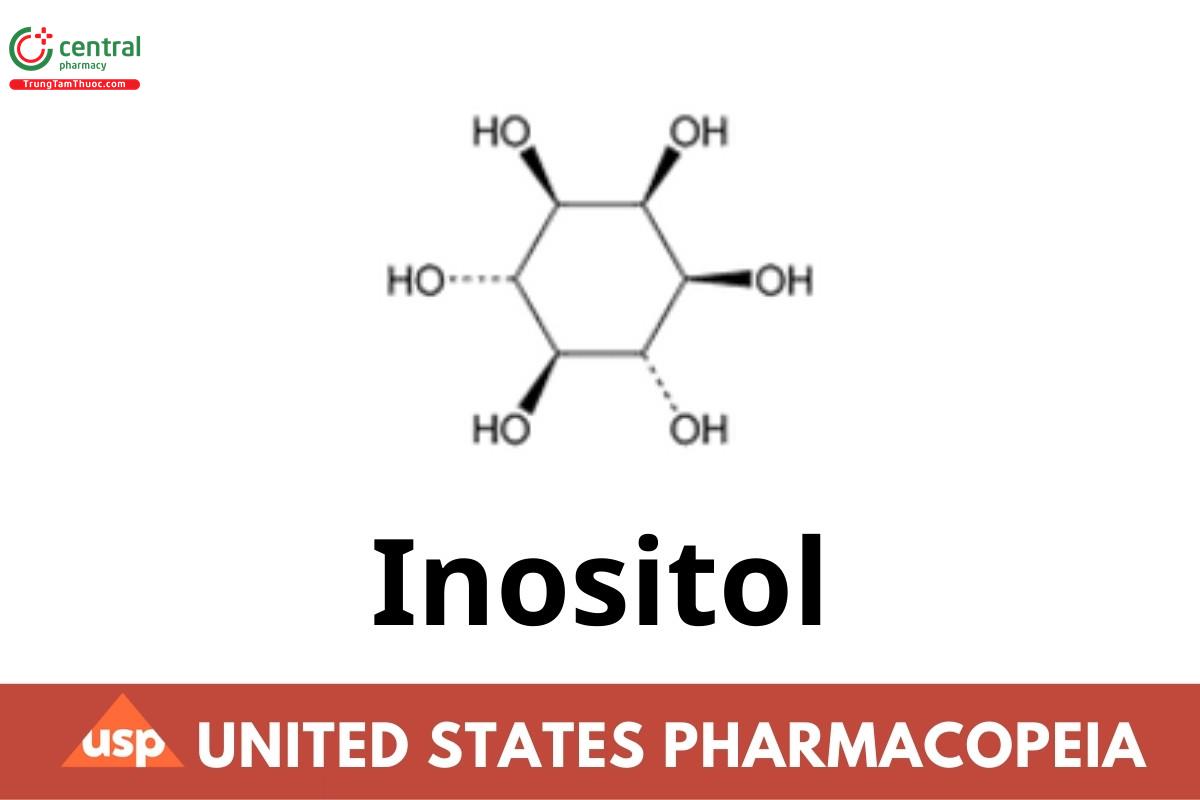

This article is compiled based on the United States Pharmacopeia (USP) – 2025 Edition
Issued and maintained by the United States Pharmacopeial Convention (USP)
1 DEFINITION
Inositol contains NLT 97.0% and NMT 102.0% of Inositol (C6H12O6), calculated on the anhydrous basis.
2 IDENTIFICATION
Change to read:
A. SPECTROSCOPIC IDENTIFICATION TESTS 〈197〉 , Infrared Spectroscopy : 197K (CN 1-M -2020)
B. The retention time of the major peak of the Sample solution corresponds to that of the Standard solution, as obtained in the Assay.
3 ASSAY
3.1 PROCEDURE
Mobile phase: Water
System suitability solution: 0.05 mg/mL of USP Inositol RS and 0.05 mg/mL of USP Mannitol RS Standard solution: 50 mg/mL of USP Inositol RS
Sample solution: 50 mg/mL of Inositol
3.1.1 Chromatographic system
(See Chromatography 〈621〉, System Suitability.)
Mode: LC
Detector: Refractive index
Column: 7.8-mm × 30-cm or equivalent; packing L19
Temperature
Column: 85°
Detector: Constant temperature of 30°–35°
Flow rate: 0.5 mL/min
Injection volume: 10 µL
3.1.2 System suitability
Samples: System suitability solution and Standard solution
[NOTE—The relative retention times for inositol and mannitol are 1.0 and 1.3, respectively.]
Suitability requirements
Resolution: NLT 4.0 between inositol and mannitol, System suitability solution Relative standard deviation: NMT 2.0%, Standard solution
3.1.3 Analysis
Samples: Standard solution and Sample solution
[NOTE—Record the chromatograms over a period of two times the retention time of inositol, and measure the peak responses.] Calculate the percentage of Inositol (C6H12O6) in the portion of sample taken:
Result = (rU/rS) × (CS/CU) × 100
rU = peak response of inositol from the Sample solution
rS = peak response of inositol from the Standard solution
CS = concentration of USP Inositol RS in the Standard solution (mg/mL)
CU = concentration of Inositol in the Sample solution (mg/mL)
Acceptance criteria: 97.0%–102.0% on the anhydrous basis
4 IMPURITIES
4.1 BARIUM
Sample solution: Use the Sample solution prepared in the test for Clarity of Solution. To 10 mL of the Sample solution add 1 mL of diluted sulfuric acid.
Acceptance criteria: When examined immediately and after 1 h, any opalescence in the solution is not more intense than that in a mixture of 1 mL of water and 10 mL of the Sample solution from the test for Clarity of Solution.
Change to read:
4.2 LIMIT OF LEAD
Lead nitrate stock solution: Dissolve 159.8 mg of lead nitrate in 100 mL of water to which has been added 1 mL of nitric acid, then dilute with water to 1000 mL. Prepare and store this solution in glass containers free from soluble lead salts.
Standard lead solution: On the day of use, dilute 10.0 mL of the Lead nitrate stock solution with water to 100.0 mL. Each mL of the Standard lead solution contains the equivalent of 10 µg of lead. (ERR 1-May-2019)
Sample solution: Dissolve 20.0 g of Inositol in diluted acetic acid, and dilute with diluted acetic acid to 100 mL. Add 2.0 mL of a saturated ammonium pyrrolidinedithiocarbamate solution (containing about 10 g of ammonium pyrrolidinedithiocarbamate per L) and 10.0 mL of methyl isobutyl ketone, and shake for 30 s. Protect from bright light. Allow the two layers to separate, and use the methyl isobutyl ketone layer.
Blank solution: Prepare as directed for the Sample solution, except omit the use of Inositol.
Standard solutions: Prepare as directed for the Sample solution, except prepare three Standard solutions by adding 0.5, 1.0, and 1.5 mL, respectively, of the Standard lead solution in addition to the 20.0 g of Inositol to be examined.
4.2.1 Instrumental conditions
(See Atomic Absorption Spectroscopy 〈852〉.) Mode: Atomic absorption
Analytical wavelength: 283.3 nm Lamp: Lead hollow-cathode Flame: Air–acetylene
4.2.2 Analysis
Set the atomic absorption spectrometer to zero, using the Blank solution. Introduce the Sample solution and each of the three Standard solutions into the instrument, and record the steady absorbance reading. Plot the absorbance readings against the known concentrations of added lead (in µg), and draw a straight line. Extrapolate the line until it meets the concentration axis to obtain the concentration, in mg/kg, of lead in the sample.
Acceptance criteria: NMT 0.5 mg/kg
4.3 ORGANIC IMPURITIES
Mobile phase, System suitability solution, and Sample solution: Proceed as directed in the Assay.
Standard solution: Transfer 2.0 mL of the Standard solution, prepared as directed in the Assay, to a 100-mL volumetric flask, and dilute with water to volume.
[NOTE—This solution contains 1 mg/mL of inositol.]
4.3.1 Chromatographic system
Proceed as directed in the Assay, except use an injection volume of 20 µL. Analysis
Samples: Standard solution and Sample solution
Calculate the percentage of each impurity in the portion of Inositol taken:
Result = (rU/rS) × (CS/CU) × 100
rU = peak response of any impurity from the Sample solution
rS = peak response of inositol from the Standard solution
CS = concentration of USP Inositol RS in the Standard solution (mg/mL)
CU = concentration of Inositol in the Sample solution (mg/mL)
4.3.2 Acceptance criteria
Individual impurities: NMT 0.3%
Total impurities: NMT 1.0%. [NOTE—Disregard any impurity peak that is less than 0.05%.]
5 SPECIFIC TESTS
Change to read:
5.1 CLARITY OF SOLUTION
[NOTE—The Sample solution is to be compared to Reference suspension A in diffused daylight 5 min after preparation of Reference suspension A.]
Solution A: 10 mg/mL of hydrazine sulfate. Allow to stand for 4–6 h before use. Solution B: 100 mg/mL of methenamine prepared in a glass-stoppered flask.
Primary opalescent suspension: [NOTE—This suspension is stable for 2 months, provided it is stored in a glass container free from surface defects. The suspension must not adhere to the glass and must be well mixed before use.]Solution A and Solution B (1:1). Allow to stand for 24 h.
Opalescence standard: Transfer 15.0 mL of the Primary opalescent suspension to a 1000-mL volumetric flask, dilute with water to volume. [NOTE—This suspension should not be used beyond 24 h after preparation.]
Reference suspensions
Reference suspension A: Transfer 5.0 mL of the Opalescence standard to a 100-mL volumetric flask, and dilute with water to volume. Reference suspension B: Transfer 10.0 mL of the Opalescence standard to a 100-mL volumetric flask, and dilute with water to volume.
Sample solution: 100 mg/mL of Inositol
Analysis: Transfer a sufficient portion of the Sample solution to a sample tube of colorless, transparent, neutral glass, with a flat base and an internal diameter of 15–25 mm, to obtain a depth of 40 mm. Similarly transfer portions of Reference suspension A, Reference suspension B, and water to separate matching sample tubes. Compare the Sample solution, Reference suspension A, Reference suspension B, and water in diffused daylight, viewing vertically against a black background (see Visual Comparison 〈630〉 (CN 1-May-2019) ). [NOTE—The diffusion of light must be such that Reference suspension A can readily be distinguished from water, and that Reference suspension B can readily be distinguished from Reference suspension A.]
Acceptance criteria: The Sample solution shows the same clarity as that of water.
Change to read:
5.2 COLOR OF SOLUTION
Standard stock solutions: Prepare three solutions, A, B, and C, containing, respectively, the following parts of ferric chloride CS, cobaltous chloride CS, cupric sulfate CS, and diluted hydrochloric acid.
Standard stock solution A: 2.4:0.6:0:7.0 Standard stock solution B: 2.4:1.0:0.4:6.2 Standard stock solution C: 9.6:0.2:0.2:0
Standard solutions: [NOTE—Prepare the Standard solutions immediately before use.]
Standard solution A: Transfer 2.5 mL of Standard stock solution A to a 100-mL volumetric flask, dilute with diluted hydrochloric acid to volume, and mix.
Standard solution B: Transfer 2.5 mL of Standard stock solution B to a 100-mL volumetric flask, dilute with diluted hydrochloric acid to volume, and mix.
Standard solution C: Transfer 0.75 mL of Standard stock solution C to a 100-mL volumetric flask, dilute with diluted hydrochloric acid to volume, and mix.
Sample solution: Use the Sample solution prepared in Clarity of Solution.
Analysis: Transfer a sufficient portion of the Sample solution to a sample tube of colorless, transparent, neutral glass, with a flat base and an internal diameter of 15–25 mm, to obtain a depth of 40 mm. Similarly transfer portions of Standard solution A, Standard solution B, Standard solution C, and water to separate matching sample tubes. Compare the Sample solution, Standard solution A, Standard solution B, Standard solution C, and water in diffused daylight, viewing vertically against a white background (see Visual Comparison 〈630〉 (CN 1-May-2019) ).
Acceptance criteria: The Sample solution is not more intensely colored than Standard solution A, Standard solution B, Standard solution C, or water.
5.3 CONDUCTIVITY
Sample solution: 0.2 g/mL of Inositol in water (previously boiled and cooled to room temperature).
Apparatus: Use a conductivity meter or a resistivity meter that measures the resistance of the column of liquid between the electrodes of the immersed measuring device. The apparatus is supplied with alternating current to avoid the effects of electrode polarization. It is equipped with a temperature compensation device or a precision thermometer.
Reagents: Prepare three Standard solutions of potassium chloride containing 0.7455, 0.0746, and 0.0149 g, respectively, of potassium chloride per 1000.0 g of solution. These solutions should be prepared with water that has been previously boiled and cooled to room temperature and whose conductivity does not exceed 2 µS/cm. The conductivity and resistivity of these three solutions at 20° are provided in Table 1.
Table 1
Calibration: Choose a conductivity cell that is appropriate for the conductivity of the solution to be examined. The higher the expected conductivity, the higher the cell constant that must be chosen. Commonly used conductivity cells have cell constants of the order 0.1, 1, and 10 cm−1. Use a standard solution of potassium chloride that is appropriate for the measurement. The conductivity value of the standard solution of potassium chloride should be near the expected conductivity value of the Sample solution. Rinse the cell several times with water that has been previously boiled and cooled to room temperature, and rinse at least twice with the potassium chloride solution used for the determination of the cell constant of the conductivity cell. Measure the resistance of the conductivity cell, using the potassium chloride solution at 20 ± 0.1°.
Calculate the constant, in cm−1, of the conductivity cell:
Result = RKCl× KKCl
RKCl = measured resistance, expressed in mega-ohms
KKCl = conductivity of the standard solution of potassium chloride used, expressed in µS/cm. The measured constant of the conductivity cell must be within 5% of the given value.
Analysis: Rinse the conductivity cell several times with water that has been previously boiled and cooled to room temperature, and rinse at least twice with the Sample solution. Measure the conductivity of the Sample solution, while gently stirring with a magnetic stirrer.
Acceptance criteria: NMT 20 µS/cm
5.4 WATER DETERMINATION, Method I 〈921〉
NMT 0.5% determined on a 1.0-g sample
6 ADDITIONAL REQUIREMENTS
PACKAGING AND STORAGE: Preserve in well-closed containers, and store at room temperature.
USP REFERENCE STANDARDS 〈11〉
USP Inositol RS USP Mannitol RS

