
Hexylene Glycol
If you find any inaccurate information, please let us know by providing your feedback here
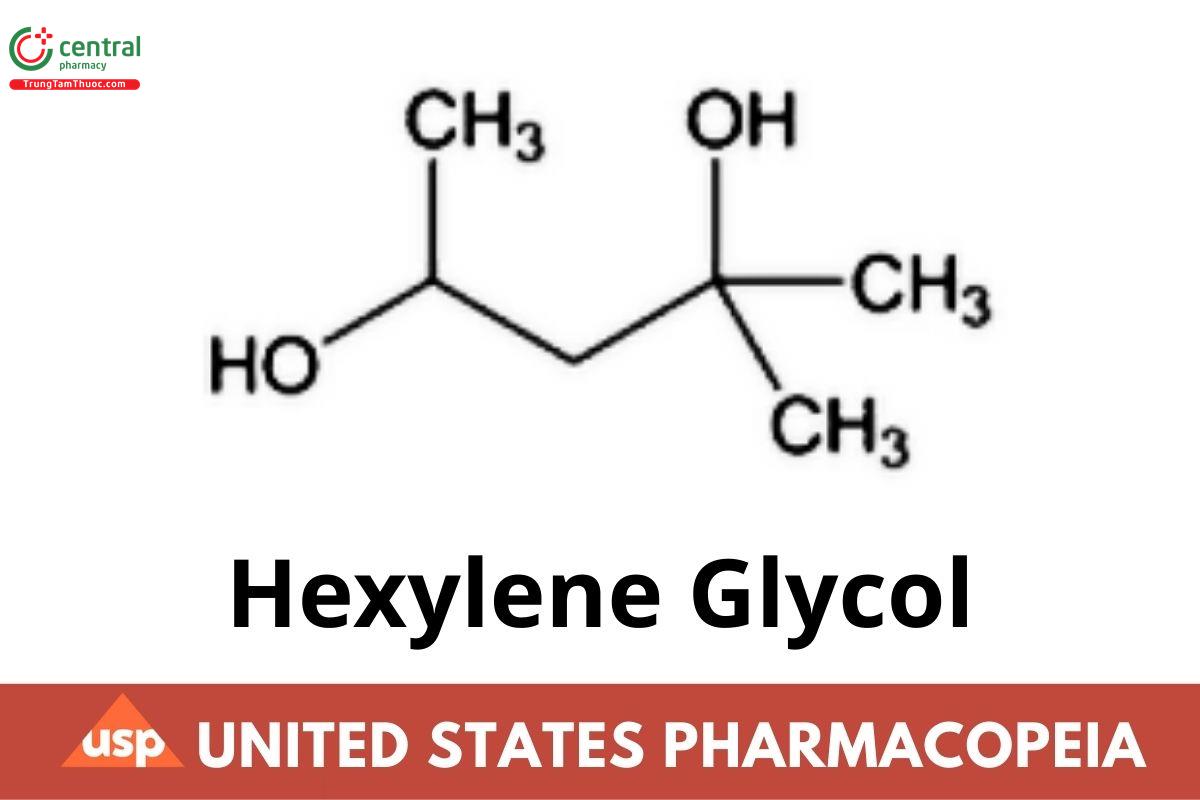

This article is compiled based on the United States Pharmacopeia (USP) – 2025 Edition
Issued and maintained by the United States Pharmacopeial Convention (USP)
C6H14O2 118.18 (NF 1-May-2020)
2,4-Pentanediol, 2-methyl-;
2-Methyl-2,4-pentanediol;
2-Methylpentane-2,4-diol (NF 1-May-2020) CAS RN: 107-41-5.
1 DEFINITION
Change to read:
Hexylene Glycol contains NLT 98.0% and NMT 102.0% of 2-methylpentane-2,4-diol, calculated on the anhydrous basis. (NF 1-May-2020)
2 IDENTIFICATION
Change to read:
A. Spectroscopic Identification Tests 〈197〉, Infrared Spectroscopy: 197F (CN 1-May-2020)
Sample: Undried specimen
Acceptance criteria: Meets the requirements
Add the following:
B. Chromatographic Identity
Analysis: Examine the chromatograms from the Assay.
Acceptance criteria: The retention time of the major peak of the Sample solution corresponds to that of the Standard solution. (NF 1-May-2020)
3 ASSAY
Add the following:
Procedure
Diluent: Methanol
Internal standard solution: 1.0 mg/mL of USP Propylene Glycol RS (internal standard) in Diluent
System suitability solution: 0.1 mg/mL of diacetone alcohol and 1.0 mg/mL of USP Hexylene Glycol RS in Internal standard solution
Standard solution: 1.0 mg/mL of USP Hexylene Glycol RS in Internal standard solution
Sample solution: 1.0 mg/mL of Hexylene Glycol in Internal standard solution
Chromatographic system
(See Chromatography 〈621〉, System Suitability.)
Mode: GC
Detector: Flame ionization
Column: 0.32-mm × 60-m capillary; bonded with a 1.0-µm layer of phase G1
Temperatures
Injection port: 200°
Detector: 300°
Column: See Table 1.
Table 1
| Initial Temperature (°) | Temperature Ramp (°/min) | Final Temperature (°) | Hold Time at Final Temperature (min) |
| 40 | 0 | 40 | 3 |
| 40 | 15 | 200 | 15 |
Carrier gas: Helium
Pressure: 15 psi (constant pressure mode)
Injection volume: 1.0 µL
Injection type: Split ratio, 100:1
Liner: Ultra inert liner with glass wool, low pressure drop1
System suitability
Samples: System suitability solution and Standard solution
[Note—The approximate relative retention times are listed in Table 2.]
Suitability requirements
Resolution: NLT 5 between hexylene glycol and diacetone alcohol, System suitability solution
Tailing factor: NMT 2.0, Standard solution
Relative standard deviation: NMT 2.0% for the peak response ratio of hexylene glycol to the internal standard, Standard solution
Analysis
Samples: Standard solution and Sample solution
Calculate the percentage of hexylene glycol in the portion of the sample taken:
Result = (Ru /Rs ) × (Cs /Cu ) × 100
Ru = peak response ratio of hexylene glycol to the internal standard (peak response of hexylene glycol/peak response of the internal standard) from the Sample solution
Rs = peak response ratio of hexylene glycol to the internal standard (peak response of hexylene glycol/peak response of the internal standard) from the Standard solution
Cs = concentration of USP Hexylene Glycol RS in the Standard solution (mg/mL)
Cu = concentration of Hexylene Glycol in the Sample solution (mg/mL)
Acceptance criteria: 98.0%–102.0% on the anhydrous basis (NF 1-May-2020)
4 IMPURITIES
Change to read:
Organic Impurities
Diluent and Chromatographic system: Proceed as directed in the Assay.
Sensitivity solution: 0.01 mg/mL of USP Hexylene Glycol RS in Diluent
System suitability solution: 0.2 mg/mL of USP Acetone RS and 0.2 mg/mL of USP 2-Propanol RS in Diluent
Standard solution: 0.02 mg/mL of USP Hexylene Glycol RS in Diluent
Sample solution: 20.0 mg/mL of Hexylene Glycol in Diluent
System suitability
Samples: Sensitivity solution, System suitability solution, and Standard solution
[Note—The approximate relative retention times are listed in Table 2.]
Suitability requirements
Resolution: NLT 1.5 between the acetone peak and the 2-propanol peak, System suitability solution
Relative standard deviation: NMT 5.0%, determined from the hexylene glycol peak, Standard solution
Signal-to-noise ratio: NLT 10, determined from the hexylene glycol peak, Sensitivity solution
Analysis
Samples: Standard solution and Sample solution
Calculate the percentage of each individual impurity in the portion of the sample taken:
Result = (ru /rs ) × (Cs /Cu ) × (1/F) × 100
ru = peak area of each individual impurity from the Sample solution
rs = peak area of hexylene glycol from the Standard solution
Cs = concentration of USP Hexylene Glycol RS in the Standard solution (mg/mL)
Cu = concentration of Hexylene Glycol in the Sample solution (mg/mL)
F = relative response factor (see Table 2)
Acceptance criteria: See Table 2.
Table 2
| Name | Relative Retention Time | Relative Response Factor | Acceptance Criteria, NMT (%) |
| Acetone | 0.42 | 0.9 | 0.1 |
| 2-Propanol | 0.43 | 0.9 | 0.1 |
| 4-Methylpentan-2-one | 0.77 | 1.3 | 0.1 |
| 4-Methylpentan-2-ol | 0.81 | 1.4 | 0.1 |
| Diacetone alcohola | 0.91 | 1.0 | 0.1 |
| Hexylene glycol | 1.0 | ||
| Any other individual impurity | 1.0 (ERR 1-May-2020) | 0.1 | |
| Total impurities | 1.0 (NF 1-May-2020) |
a 4-Hydroxy-4-methylpentan-2-one.
5 SPECIFIC TESTS
SPECIFIC GRAVITY (841): 0.917-0.923
REFRACTIVE INDEX (831): 1.424-1,430
ACIDITY
Sample: 10 mL
Analysis: Mix 1 mL of phenolphthalein TS with 50 mL of water, and add 0.1 N sodium hydroxide until the solution remains pink for 30 s. Add the Sample, and titrate with 0.10 N sodium hydroxide until the original pink color returns and remains for 30 s.
Acceptance criteria: NMT 0.20 mL of 0.10 N sodium hydroxide is required.
WATER DETERMINATION (921), Method: NMT 0.5%
6 ADDITIONAL REQUIREMENTS
PACKAGING AND STORAGE: Preserve in tight containers.
Change to read:
USP REFERENCE STANDARDS (11)
USP Acetone B (NF 1-May-2020)
USP Hexylene Glycol RS
USP 2-Propanol RS
USP Propylene Glycol (NF 1-May-2020)
1 Agilent PN 5190-3165 liner has been suitable. Other equivalent liners are also suitable.

