
Galactose
If you find any inaccurate information, please let us know by providing your feedback here
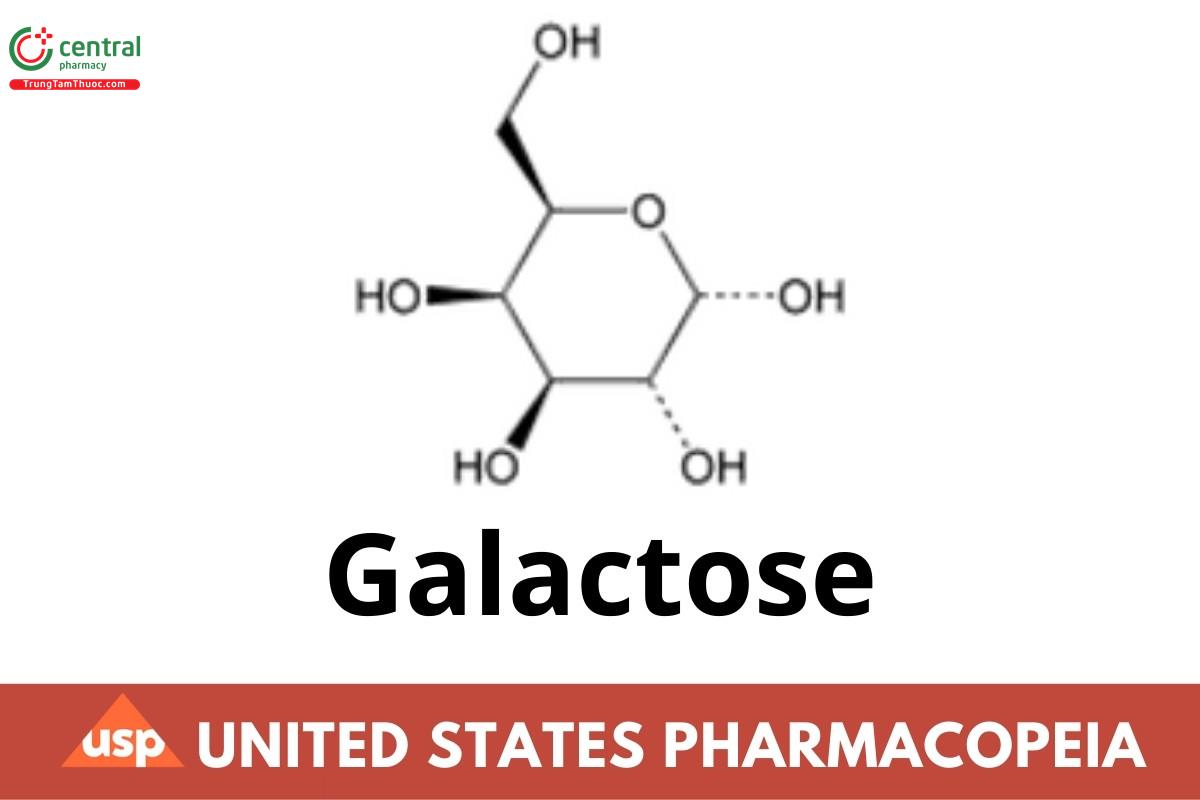

This article is compiled based on the United States Pharmacopeia (USP) – 2025 Edition
Issued and maintained by the United States Pharmacopeial Convention (USP)
1 DEFINITION
Change to read:
Galactose contains NLT 98.0% and NMT 102.0% of D-galactopyranose (C6H12O6), calculated on the anhydrous basis. It is obtained either as one of the products of the metabolism of lactose, a naturally occurring sugar in dairy products, by the digestive enzyme lactase, or from arabinogalactans isolated from a plant-derived source. (NF 1-Aug-2020)
2 IDENTIFICATION
Change to read:
A. SPECTROSCOPIC IDENTIFICATION TESTS 〈197〉 , Infrared Spectroscopy: 197K
[NOTE—Disregard any peaks at about 875 and 889 cm−1.] (NF 1-A -2020)
Delete the following:
B. THIN-LAYER CHROMATOGRAPHIC IDENTIFICATION TEST 〈201〉
Solution A: Methanol and water (60:40)
Standard solution A: 500 µg/mL of USP Galactose RS in Solution A
Standard solution B: 500 µg/mL each of USP Galactose RS, USP Dextrose RS, and USP Lactose Monohydrate RS in Solution A Sample solution: Dissolve 10 mg of Galactose in 20 mL of Solution A.
2.1 Chromatographic system
(See Chromatography 〈621〉, Thin-Layer Chromatography.) Application volume: 2 µL
Developing solvent system: Propanol and water (85:15)
Spray reagent: 0.5 g of thymol in a mixture of alcohol and sulfuric acid (95:5)
2.2 System suitability
Sample: Standard solution B
Suitability requirements
Resolution: There must be three clearly resolved spots in the chromatogram for Standard solution B.
2.3 Analysis
Samples: Standard solution A, Standard solution B, and Sample solution
Develop the plate in an unsaturated tank. After the solvent front has moved over 15 cm, remove the plate from the tank. Dry the plate with warm air, then spray the plate with Spray reagent. Heat for 10 min in an oven at 130°.
Acceptance criteria: The RF of the principal spot of the Sample solution corresponds to that of Standard solution A. (NF 1-Aug-2020)
Add the following:
B. Chromatographic Identity
Analysis: Proceed as directed in the Assay.
Acceptance criteria: The retention time of the major peak of the Sample solution corresponds to the galactose peak of the Standard solution, as obtained in the Assay. (NF 1-Aug-2020)
Add the following:
C.
Sample solution: 10 mg/mL
Analysis: To 10 mL of the Sample solution add 3 mL of alkaline cupric tartrate TS and heat. Acceptance criteria: An orange or red precipitate is formed. (NF 1-Aug-2020)
3 ASSAY
Add the following:
3.1 Procedure
Mobile phase: 0.009 N sulfuric acid
System suitability solution: 10 mg/mL of USP Galactose RS and 0.2 mg/mL each of USP Arabinose RS, galacturonic acid, 1USP Dextrose RS, and USP Anhy drous Lactose RS in Mobile phase
[NOTE—Use plastic HPLC vials for the Standard solution and Sample solution.] Standard solution: 10 mg/mL of USP Galactose RS in Mobile phase
Sample solution: 10 mg/mL of Galactose in Mobile phase
3.1.1 Chromatographic system
(See Chromatography 〈621〉, System Suitability.) Mode: LC
Detector: Refractive index
Column: Two 7.8-mm × 30-cm columns in tandem; 9-µm packing L17
Temperatures
Column: 35°
Detector: 40°
Flow rate: 0.25 mL/min Injection volume: 25 µL Run time: 70 min
3.1.2 System suitability
Samples: System suitability solution and Standard solution
[NOTE—The relative retention times for lactose, galacturonic acid, dextrose, galactose, and arabinose are listed in Table 1.]
Suitability requirements
Resolution: NLT 3.0 between the lactose and galacturonic acid peaks; NLT 1.5 between the galacturonic acid and dextrose peaks; NLT 2.0 between the dextrose and galactose peaks; NLT 3.0 between the galactose and arabinose peaks, System suitability solution
Relative standard deviation: NMT 1.0%, Standard solution
3.1.3 Analysis
Samples: Standard solution and Sample solution
Calculate the percentage of galactose in the portion of Galactose taken:
Result = (ru/rs) × (Cs/Cu) × 100
ru = peak area of galactose from the Sample solution
rs = peak area of galactose from the Standard solution
Cs = concentration of USP Galactose RS in the Standard solution (mg/mL)
Cu = concentration of Galactose in the Sample solution (mg/mL)
Acceptance criteria: 98.0%–102.0% on the anhydrous basis (NF 1-Aug-2020)
4 IMPURITIES
Add the following:
4.1 Related Substances
Mobile phase, System suitability solution, Sample solution, and Chromatographic system: Proceed as directed in the Assay.
Sensitivity solution: 5 µg/mL each of USP Arabinose RS, galacturonic acid, 1USP Dextrose RS, and USP Anhy drous Lactose RS in Mobile phase.
4.1.1 System suitability
Samples: System suitability solution and Sensitivity solution
Suitability requirements
Resolution: NLT 3.0 between the lactose and galacturonic acid peaks; NLT 1.5 between the galacturonic acid and dextrose peaks; NLT 2.0 between the dextrose and galactose peaks; NLT 3.0 between the galactose and arabinose peaks, System suitability solution
Signal-to-noise ratio: NLT 10 for the lactose, galacturonic acid, dextrose, and arabinose peaks, Sensitivity solution
4.1.2 Analysis
Sample: Sample solution
Record the chromatograms and measure the area response of each peak in the chromatogram of the Sample solution. Disregard any peak due to the solvent and the peak at the relative retention time of approximately 0.64.
Calculate the percentage of each individual impurity in the portion of Galactose taken:
Result = ru/(rs × F) × 100
ru = peak area of each individual impurity from the Sample solution
rs = peak area of galactose from the Sample solution
F = relative response factor (see Table 1) Acceptance criteria: See Table 1.
Table 1
| Name | Relative Retention Time | Relative Response Factor | Acceptance Criteria, NMT (%) |
| Lactose and 1,6- galactosylgalactose | 0.79 | 0.95 | 0.6 |
| Galacturonic acid | 0.89 | 0.88 | 0.6 |
| Dextrose | 0.93 | 0.99 | 0.6 |
| Tagatose | 0.96 | 0.96 | 0.6 |
| Dulcitol | 1.06 | 0.96 | 0.6 |
| Arabinose | 1.10 | 0.95 | 0.6 |
| Any unspecified impurity | — | 1.0 | 0.2 |
| Total impurities | — | — | 1.0 (NF 1-Aug-2020) |
4.2 RESIDUE ON IGNITION 〈281〉
NMT 0.1%
4.3 LIMIT OF LEAD
Diluent: Dilute 12 mL of acetic acid with water to 100 mL. Mix equal parts of this solution and water to prepare the Diluent. Lead standard solution: 16 µg/mL of lead nitrate
Standard solutions: To three identical flasks add 0.5, 1.0, and 1.5 mL of Lead standard solution, respectively, and then add to each flask 20.0 g of Galactose. Dilute with Diluent to 100 mL. To each flask add 2.0 mL of ammonium pyrrolidinedithiocarbamate solution (10 mg/mL) and 10.0 mL of methyl isobutyl ketone, then shake for 30 s. Protect from light. Allow the layers to separate, and use the methyl isobutyl ketone (upper) layer.
Sample solution: Dissolve 20.0 g of Galactose in 100 mL of Diluent. Add 2.0 mL of ammonium pyrrolidinedithiocarbamate solution (10 mg/mL) and 10.0 mL of methyl isobutyl ketone, and shake for 30 s. Protect from light. Allow the layers to separate, and use the methyl isobutyl ketone (upper) layer.
4.3.1 Instrumental conditions
(See Atomic Absorption Spectroscopy 〈852〉.) Mode: Atomic absorption spectrophotometry Analytical wavelength: 283.3 nm
Lamp: Lead hollow-cathode Flame: Air–acetylene
4.3.2 Analysis
Samples: Standard solutions and Sample solution
Concomitantly determine, at least in triplicate, the absorbances of the Samples. Record the average steady readings for each of the Standard solutions and the Sample solution. Plot the absorbances of the Standard solutions and the Sample solution versus the amount of lead added. Extrapolate the line joining the points on the graph until it meets the concentration axis. The distance between this point and the intersection of the axes represents the concentration of lead in the Sample solution.
Acceptance criteria: NMT 0.5 µg/g
4.4 BARIUM
Standard solution: Add 6 mL of water to 5 mL of the Sample solution prepared for the Acidity test.
Sample solution: Add 5 mL of water and 1 mL of dilute sulfuric acid to 5 mL of the Sample solution prepared for the Acidity test. Allow to stand for 1 h.
Acceptance criteria: Any opalescence in the Sample solution is not more intense than that in the Standard solution.
5 SPECIFIC TESTS
5.1 APPEARANCE OF SOLUTION
Sample solution: Dissolve, with heating at 50°, 10.0 g of Galactose in 50 mL of carbon dioxide-free water.
Control solution: Prepare immediately before use by mixing 3.0 mL of ferric chloride CS, 3.0 mL of cobaltous chloride CS, and 2.4 mL of cupric sulfate CS with dilute hy drochloric acid (10 mg/mL) to make 10 mL, and diluting 1.5 mL of this solution with the dilute hy drochloric acid to 100 mL.
Analysis: Compare by viewing the Sample solution and the Control solution downward in matched color-comparison tubes against a white surface (see Color and Achromicity 〈631〉).
Acceptance criteria: The Sample solution is not more intensely colored than the Control solution.
5.2 MICROBIAL ENUMERATION TESTS 〈61〉 and TESTS FOR SPECIFIED MICROORGANISMS 〈62〉
The total aerobic microbial count does not exceed 103 cfu/g, and the total combined molds and yeasts count does not exceed 102 cfu/g. It meets the requirements of the tests for absence of Salmonella species, Escherichia coli, Staphylococcus aureus, and Pseudomonas aeruginosa.
5.3 OPTICAL ROTATION 〈781S〉 , Procedures, Specific Rotation
Sample solution: Transfer 10.0 g to a 100-mL volumetric flask, and dissolve in 80 mL of water. Add 0.2 mL of ammonia TS, allow to stand for 30 min, then dilute with water to volume.
Analysis: Perform at 20°. Acceptance criteria: +78.0° to +81.5°
5.4 ACIDITY
Sample solution: Dissolve 10.0 g of Galactose, with heating at 50°, in 40 mL of carbon dioxide-free water. Dilute with carbon dioxide-free water to 50 mL. [NOTE—Use this solution for the Barium test.]
Analysis: To 30 mL of the Sample solution add 0.3 mL of phenolphthalein TS, and titrate with 0.01 N sodium hy droxide to a pink color.
Acceptance criteria: NMT 1.5 mL of 0.01 N sodium hydroxide is required.
5.5 WATER DETERMINATION 〈921〉 , Method I
NMT 1.0%
6 ADDITIONAL REQUIREMENTS
PACKAGING AND STORAGE: Preserve in a tight container. No storage requirements specified. Add the following:
Labeling: Label it to indicate whether Galactose is derived from an animal or plant source. (NF 1-Aug-2020)
Change to read:
USP REFERENCE STANDARDS 〈11〉
USP Arabinose RS (NF 1-Aug-2020)
USP Dextrose RS USP Galactose RS
USP Anhydrous Lactose RS (NF 1-Aug-2020)
1 Use a suitable grade with a content of NLT 97.0%. (NF 1-Aug-2020)

