
Creatinine
If you find any inaccurate information, please let us know by providing your feedback here
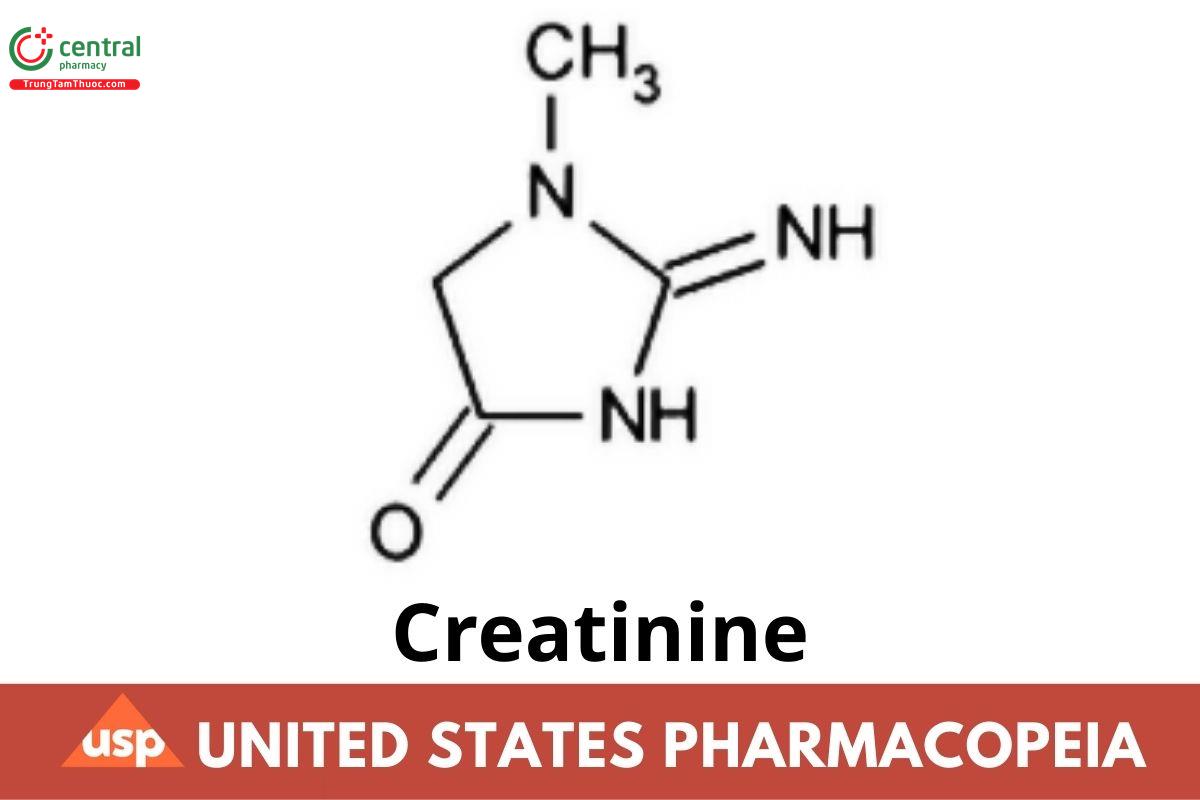

This article is compiled based on the United States Pharmacopeia (USP) – 2025 Edition
Issued and maintained by the United States Pharmacopeial Convention (USP)
C4H7N3O 113.12
1 DEFINITION
Creatinine contains NLT 98.5% and NMT 102.0% of C4H7N3O, as Creatinine, calculated on the dried basis.
2 IDENTIFICATION
Change to read:
A. SPECTROSCOPIC IDENTIFICATION TESTS (197), Infrared Spectroscopy: 197K (CN 1-MAY-2020)
3 ASSAY
PROCEDURE
Sample: 40 mg of Creatinine
Titrimetric system
(See Titrimetry (541).)
Mode: Direct titration
Titrant: 0.1 N perchloric acid VS
Endpoint detection: Potentiometric
Indicator electrode: Glass
Reference electrode: Silver-silver chloride
Reference electrode solution: Saturated lithium perchlorate and silver chloride in glacial acetic acid
Analysis: Dissolve the Sample in 10 mL of glacial acetic acid. Titrate the Sample with 0.1 N perchloric acid VS. Perform a blank determination, and make any necessary correction.
Calculate the percentage of creatinine (C4H7N3O) in the Sample taken:
Result = [(V − B) × N × F × 100]/W
V = volume of the Titrant consumed by the Sample (mL)
B = volume of the Titrant consumed by the Blank (mL)
N = actual normality of the Titrant (mEq/mL)
F = equivalency factor, 113.12 mg/mEq
W = weight of the Sample (mg)
Acceptance criteria: 98.5%–102.0% on the dried basis
4 IMPURITIES
Residue on Ignition 〈281〉: NMT 0.2%
5 SPECIFIC TESTS
Loss on Drying 〈731〉: Dry a sample at 105° for 3 h: it loses NMT 3.0% of its weight.
6 ADDITIONAL REQUIREMENTS
Packaging and Storage: Preserve in well-closed containers.
USP Reference Standards 〈11〉
USP Creatinine RS

