
Chlorocresol
If you find any inaccurate information, please let us know by providing your feedback here
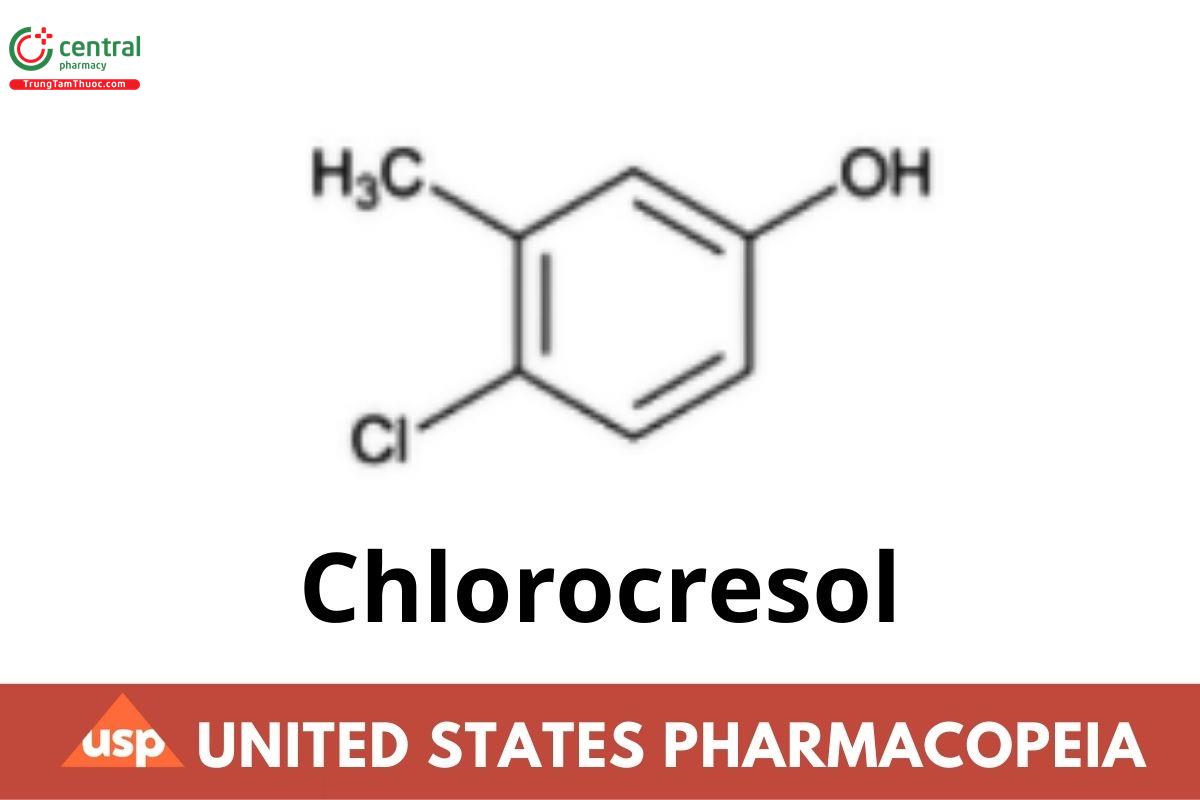

This article is compiled based on the United States Pharmacopeia (USP) – 2025 Edition
Issued and maintained by the United States Pharmacopeial Convention (USP)
C7H7ClO 142.58
Phenol, 4-chloro-3-methyl-;
4-Chloro-m-cresol CAS RN®: 59-50-7.
1 DEFINITION
Chlorocresol contains NLT 99.0% and NMT 101.0% of C7H7ClO (4-chloro-3-methylphenol).
2 IDENTIFICATION
2.1 A.
Sample solution: Dissolve 40 mg of Chlorocresol in 10 mL of water.
Analysis: Add 1 drop of ferric chloride TS to the Sample solution.
Acceptance criteria: A blue color develops.
2.2 B.
Sample: 50 mg
Analysis:
Transfer the Sample to a crucible, add 500 mg of anhydrous sodium carbonate, and mix. Heat the mixture until fused. Cool, add 5 mL of water, and boil. Acidify with 1 mL of nitric acid, filter, and add 1 mL of silver nitrate TS to the filtrate.
Acceptance criteria: A white precipitate is formed.
3 ASSAY
3.1 PROCEDURE
Sample: 70 mg
Titrimetric system
Titrimetric system
(See Titrimetry (541).)
Mode: Residual titration
Titrant: 0.1 N sodium thiosulfate VS
Endpoint detection: Visual
Analysis: Transfer the Sample to an iodine flask, add 30 mL of glacial acetic acid, 25.0 mL of 0.1 N bromine VS, 10 mL of potassium bromide solution (150 mg/mL), and 10 mL of hydrochloric acid.
Immediately insert the stopper, and allow to stand for 15 min, protected from light. Quickly add 10 mL of potassium iodide solution (100 mg/mL) and 100 mL of water, taking precautions against the escape of bromine vapor. Immediately insert the stopper, and shake the mixture thoroughly. Remove the stopper, and rinse it and the neck of the flask with a small quantity of water so that the washing flows into the flask. Add 1 mL of chloroform, and shake the mixture thoroughly.
Titrate the liberated iodine with Titrant, adding 3 mL of starch TS as the endpoint is approached. Perform a blank determination. Each mL of 0.1 N bromine VS is equivalent to 3.565 mg of C7H7ClO (4-chloro-3-methylphenol).
Acceptance criteria: 99.0%-101.0%
4 SPECIFIC TESTS
MELTING RANGE OR TEMPERATURE (741): 63°- 66°
LIMIT OF NONVOLATILE RESIDUE
Sample: 1.0 g
Analysis: Heat the Sample in a tared crucible on a steam bath until it has evaporated, and dry the residue at 105° for 1 h.
Acceptance criteria: NMT 0.1%
COMPLETENESS OF SOLUTION
Sample: 1 g
Analysis: Transfer the Sample to a test tube, add 0.4 mL of alcohol, and shake.
Acceptance criteria: The solution is complete.
5 ADDITIONAL REQUIREMENTS
PACKAGING AND STORAGE: Preserve in tight, light-resistant containers.

