
Benzalkonium Chloride Solution
If you find any inaccurate information, please let us know by providing your feedback here

Tóm tắt nội dung
This article is compiled based on the United States Pharmacopeia (USP) – 2025 Edition
Issued and maintained by the United States Pharmacopeial Convention (USP)
DOWNLOAD PDF HERE
1 DEFINITION
Benzalkonium Chloride Solution contains NLT 95.0% and NMT 105.0% of the labeled amount of benzalkonium chloride in a solution having a concentration of 1.0% or more; and NLT 93.0% and NMT 107.0% of the labeled amount of benzalkonium chloride in a solution having a concentration of less than 1.0%. It may contain a suitable coloring agent and may contain NMT 10% of alcohol.
[Caution—Mixing Benzalkonium Chloride Solution with ordinary soaps and anionic detergents may decrease or destroy the bacteriostatic activity of the Solution.]
2 IDENTIFICATION
2.1 A.
Analysis: To 2 mL of a solution having an equivalent of 10 mg/mL of benzalkonium chloride add 1 mL of 2 N nitric acid.
Acceptance criteria: A white precipitate is formed and is dissolved after adding 5 mL of alcohol.
2.2 B.
Identification Tests—General 〈191〉, Chloride: A solution of it in a mixture of equal volumes of water and alcohol meets the requirements.
2.3 C.
Analysis: Dissolve the residue, obtained by evaporating on a steam bath a volume of Solution equivalent to 200 mg of benzalkonium chloride, in 1 mL of sulfuric acid. Add 100 mg of sodium nitrate, and heat on a steam bath for 5 min. Cool, dilute with water to 10 mL, add 500 mg of zinc dust, and warm for 5 min on a steam bath. To 2 mL of the clear supernatant add 1 mL of sodium nitrite solution (1 in 20), cool in ice water, then add 3 mL of a solution of 500 mg of 2-naphthol in 10 mL of 6 N ammonium hydroxide.
Acceptance criteria: An orange-red color is produced.
2.4 D. Chromatographic Identity
Analysis: Proceed as directed in the test for Ratio of Alkyl Components.
Acceptance criteria: The retention times of the major peaks for benzalkonium chloride of the Sample solution correspond to those of the Standard solution.
3 ASSAY
3.1 Ratio of Alkyl Components
Solution A: Adjust a 0.1 M solution of sodium acetate with glacial acetic acid to a pH of 5.0.
Mobile phase: Acetonitrile and Solution A (9:11). Acetonitrile and Solution A may be adjusted from (2:3) to (3:2) to meet system suitability requirements.
Standard solution: 4 mg/mL of benzalkonium chloride prepared from USP Benzalkonium Chloride RS and water
Sample solution: Transfer a volume of Solution, equivalent to 400 mg of benzalkonium chloride, to a 100-mL volumetric ask, and dilute with water to volume.
Chromatographic system
(See Chromatography 〈621〉, System Suitability.)
Mode: LC
Detector: UV 254 nm
Column: 3.9-mm × 30-cm; packing L10 or 4.6-mm × 25-cm; 10-μm packing L10
Flow rate: 2 mL/min
Injection volume: 20 μL
System suitability
Sample: Standard solution
[Note—See Table 1. Relative retention times are provided for information only, and the Standard should be used to ensure appropriate peak identication.]
Table 1
| Name | Relative Retention Time |
| C10 homolog | 0.9 |
| C12 homolog | 1.0 |
| C14 homolog | 1.3 |
| C16 homolog | 1.7 |
Suitability requirements
Resolution: NLT 1.5 between the C12 and C14 homologs
Relative standard deviation: NMT 2.0% for the C12 homolog
Analysis
Samples: Standard solution and Sample solution
Identify the homolog peaks by comparison of the retention times from the Sample solution with those of the Standard solution.
Calculate the percentage of each quaternary ammonium homolog in the portion of Solution taken:
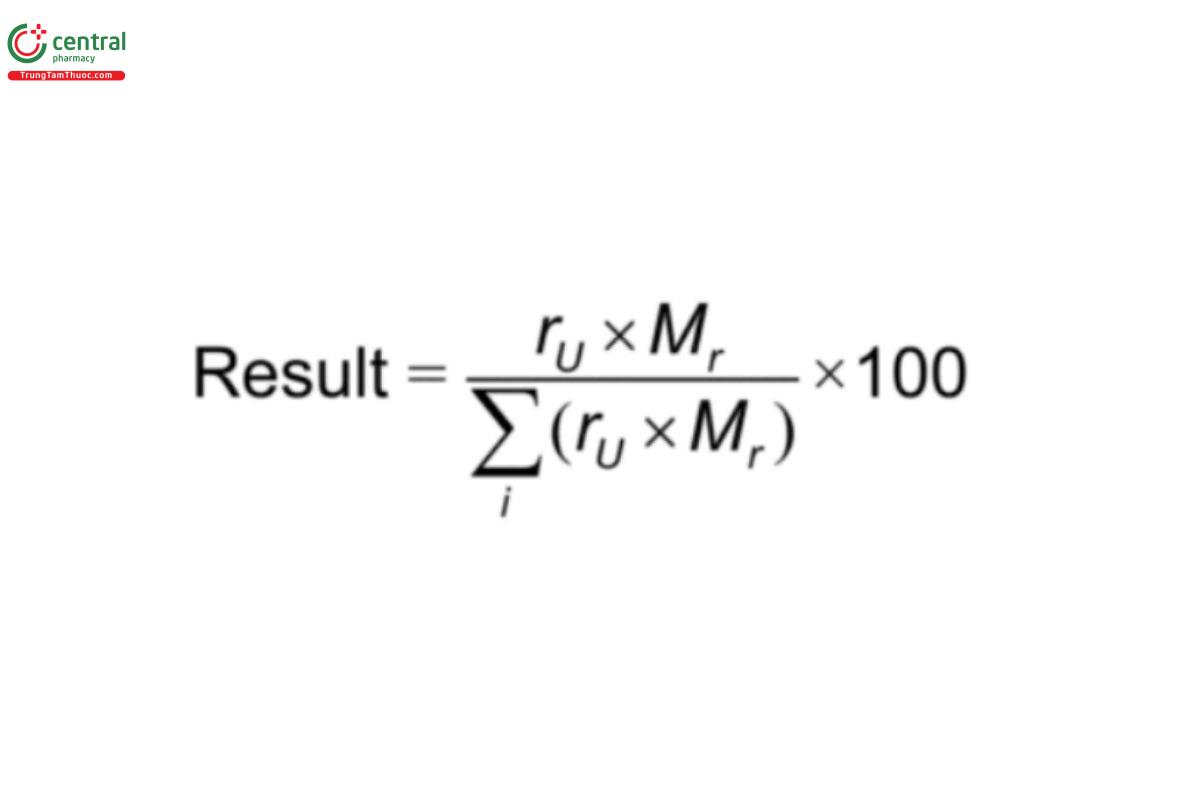
rU = peak area of each homolog from the Sample solution
Mr = molecular weight of each homolog. The molecular weights of the C10, C12, C14, and C16 homologs are 312, 340, 368, and 396, respectively.
Acceptance criteria: On the solid basis, the content of the n-C12H25 homolog is NLT 40.0%, and the content of the n-C14H29 homolog is NLT 20.0% of the total alkylbenzyldimethylammonium chloride content. The amount of the n-C12H25 and n-C14H29 homolog components together is NLT 70.0% of the total alkylbenzyldimethylammonium chloride content.
3.2 Total Alkylbenzyldimethylammonium Chlorides
Sample solution: Evaporate or dilute with water to 30 mL a volume of Solution equivalent to 500 mg of benzalkonium chloride.
Analysis: Transfer the Sample solution, with the aid of a minimum quantity of water, to a glass-stoppered, 250-mL conical separator. Transfer 25 mL of methylene chloride. Add 10 mL of 0.1 N sodium hydroxide, and 10.0 mL of freshly prepared potassium iodide solution (1 in 20), insert the stopper in the separator, shake, allow the layers to separate, and discard the methylene chloride layer. Wash the aqueous layer with three 10-mL portions of methylene chloride, and discard the washings. Transfer the aqueous layer to a glass-stoppered, 250-mL conical ask, and rinse the separator with three 5-mL portions of water, adding the washings to the ask. Add 40 mL of cold hydrochloric acid to the ask, mix, and titrate with 0.05 M potassium iodate VS until the solution becomes light brown in color. Add 5 mL of methylene chloride, insert the stopper into the ask, and shake vigorously. Continue the titration, dropwise, with shaking after each addition, until the methylene chloride layer no longer changes color and the aqueous layer is clear yellow. Record the titrant volume, V , in mL. Perform a blank determination, using 20 mL of water as the sample, and record the titrant volume, V , in mL. [Note—V > V .] The difference between the two titrations represents the amount of potassium iodate equivalent to the weight of benzalkonium chloride in the sample. Each mL of 0.05 M potassium iodate is equivalent to x/10 mg of benzalkonium chloride, where x represents the average molecular weight of the sample, derived by summing, for all homologs, the products:
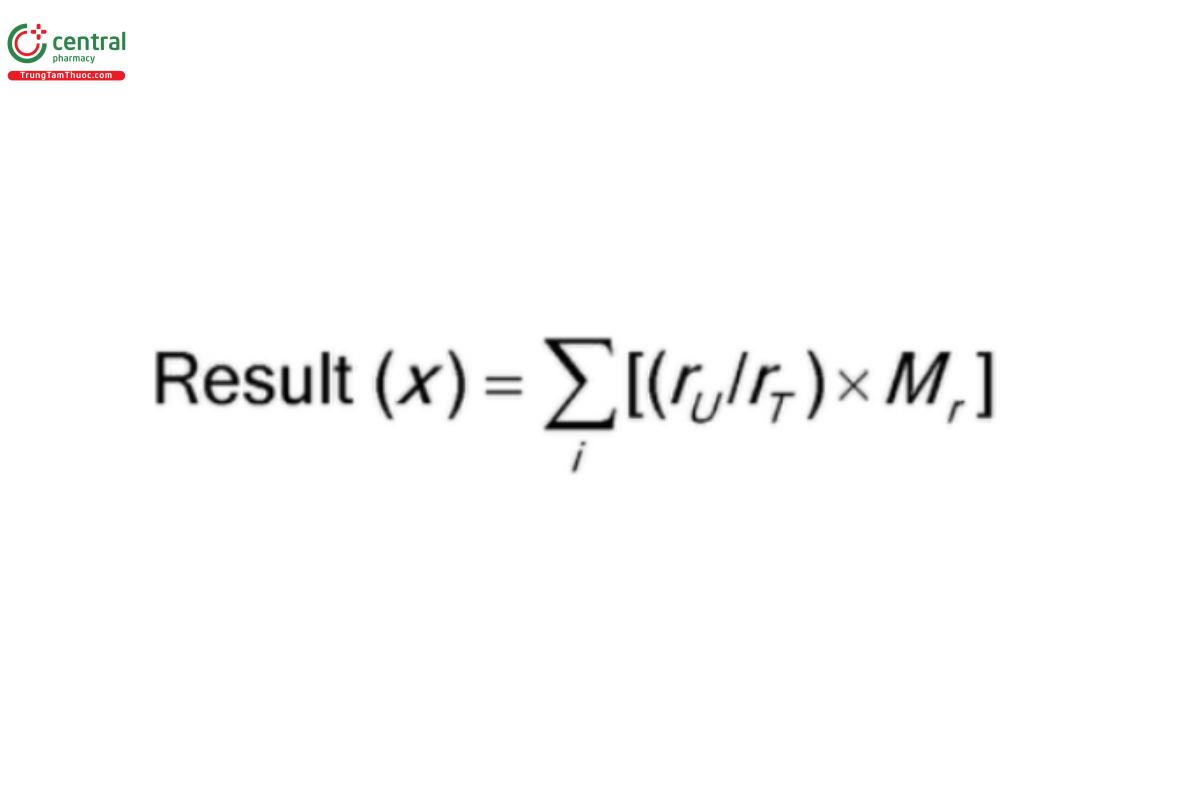
rU= peak area of each homolog from the test for Ratio of Alkyl Components
rT = sum of all the peak areas of the homologs from the test for Ratio of Alkyl Components
Mr = molecular weight of each homolog. The molecular weights of the C10, C12, C14, and C16 homologs are 312, 340, 368, and 396, respectively.
Acceptance criteria
For labeled concentrations of NLT 1.0%: 95.0%–105.0%
For labeled concentrations less than 1.0%: 93.0%–107.0%
4 OTHER COMPONENTS
4.1 Alcohol Content (if added)
Diluent: 2-Propanol and water (8:2)
Internal standard solution: 0.005 g/mL of tertiary butyl alcohol in water
Alcohol stock solution: 0.015 g/mL of alcohol (C H OH) in water
Standard solutions: Introduce 1, 2, and 4 mL, respectively, of Alcohol stock solution into three separate and identical 25-mL volumetric flasks.
To each flask add a 5-mL portion of the Internal standard solution. Dilute with Diluent to volume, and mix thoroughly. The Standard solutions contain 0.0006, 0.0012, and 0.0024 g/mL of alcohol (C H OH), respectively.
Sample solution: Weigh an appropriate amount of Solution into a 25-mL volumetric flask, and pipet 5 mL of the Internal standard solution into the flask. Dilute with Diluent to volume, and mix thoroughly to obtain a solution containing 0.0006–0.0024 g/mL of alcohol (C H OH).
Chromatographic system
(See Chromatography 〈621〉, System Suitability.)
Mode: GC
Detector: Flame ionization
Column: 0.32-mm × 15-m glass or quartz capillary; 1.8-μm layer of phase G43
Temperatures
Injection port: 250°
Detector: 320°
Column: See Table 2.
Table 2
Initial Temperature (°) | Temperature Ramp (°/min) | Final Temperature (°) | Hold Time at Final Temperature (min) |
| 50 | - | 50 | 4 |
| 50 | 10 | 70 | 0 |
| 70 | 50 | 300 | 4 |
Run time: 14.6 min
Carrier gas: Helium
Flow rate: See Table 3.
Table 3
Initial Flow (mL/min) | Flow Ramp (mL/min2) | Final Flow (mL/min) | Hold Time at Final Flow (min) |
| 1.4 | - | 1.4 | 6 |
| 1.4 | 5 | 3 | 8.6 |
Injection volume: 0.5 μL
Injection type: Split, 75:1
Inlet liner: 4-mm liner with deactivated glass wool
System suitability
Sample: Standard solution containing 0.0012 g/mL of alcohol (C2H5OH)
[Note—The relative retention times for alcohol, 2-propanol, and tertiary butyl alcohol are 0.75, 0.90, and 1.0, respectively.]
Suitability requirements
Resolution: NLT 2.0 between 2-propanol and tertiary butyl alcohol
Relative standard deviation: NMT 2% for the peak response ratio of alcohol to the internal standard
Analysis
Samples: Standard solutions and Sample solution
Plot the peak response ratios of alcohol to tertiary butyl alcohol in the Standard solutions versus the content, in g/mL, of alcohol, and draw the straight line best fitting the plotted points. From the graph obtained, determine the content, C, in g/mL, of alcohol (C H OH) in the
Sample solution.
Calculate the percentage of alcohol (C H OH) in the portion of Solution (v/v) taken:
Result = (V × C × DS)/(W × DA) × 100
V = volume of the Sample solution, 25 mL
DS = density of the Solution (g/mL)
W = weight of Solution taken to prepare the Sample solution (g)
DA = density of alcohol (g/mL)
Acceptance criteria: If present, 95.0%–105.0% of the labeled amount of alcohol (C H OH)
5 IMPURITIES
5.1 Limit of Amines and Amine Salts
Sample: A quantity of Solution equivalent to 5.0 g of benzalkonium chloride
Analysis: Dissolve the Sample by heating carefully (e.g., on top of a steam bath with water as the steam source) in 20 mL of a mixture of methanol and 1 N hydrochloric acid VS (97:3). [Note—The mixed solution, however, must not reach the boiling point.] Add 100 mL of isopropyl alcohol, and pass a stream of nitrogen slowly through the solution. Gradually add 12.0 mL of 0.1 N tetrabutylammonium
hydroxide VS while recording the potentiometric titration curve.
Acceptance criteria: If the curve shows two inflection points, the volume of titrant added between the two points is NMT 5.0 mL, corresponding to NMT 0.1 mmol/g of amines and amine salts. If the curve shows no point of inflection, the substance being examined does not comply with the test. If the curve shows one point of inflection, repeat the test, but add 3.0 mL of a 25.0 mg/mL solution of dimethyldecylamine in isopropyl alcohol before the titration. If after the addition of 12.0 mL of the titrant, the titration curve shows only one point of inflection, the substance being examined does not comply with the test.
5.2 Limit of Benzyl Alcohol, Benzaldehyde, and (Chloromethyl)benzene
[Note—Prepare the solutions immediately before use.]
Solution A: Dissolve 1.09 g of sodium 1-hexanesulfonate and 6.9 g of monobasic sodium phosphate in water in a 1000-mL volumetric flask, adjust with phosphoric acid to a pH of 3.5, and dilute with water to volume.
Solution B: Methanol
Mobile phase: See Table 4.
Table 4
Time (min) | Solution A (%) | Solution B (%) |
| 0 | 80 | 20 |
| 10 | 80 | 20 |
| 14 | 50 | 50 |
| 35 | 50 | 50 |
| 36 | 20 | 80 |
| 55 | 20 | 80 |
| 56 | 80 | 20 |
| 65 | 80 | 20 |
Standard solution A: 0.25 mg/mL of USP Benzyl Alcohol RS in methanol
Standard solution B: 0.075 mg/mL of USP Benzaldehyde RS in methanol
Standard solution C: 0.025 mg/mL of USP Benzyl Alcohol RS in methanol, prepared from Standard solution A and methanol
Sample solution: Determine the density of the Solution. Dilute a quantity of the Solution equivalent to 2.5 g of benzalkonium chloride with methanol to 50.0 mL. This solution contains 50 mg/mL of benzalkonium chloride.
Chromatographic system
(See Chromatography 〈621〉, System Suitability.)
Mode: LC
Detector: UV 210 nm for benzyl alcohol and (chloromethyl)benzene; UV 257 nm for benzaldehyde
Column: 4.6-mm × 15-cm; 5-μm packing L1
Column temperature: 30°
Flow rate: 1.0 mL/min
Injection volume: 20 μL
System suitability
Samples: Standard solution A, Standard solution B, Standard solution C, and Sample solution
[Note—See Table 5 for relative retention times.]
Table 5
| Name | Relative Retention Time |
| Benzyl alcohol | 1.0 |
| Benzaldehyde | 1.3 |
| (Chloromethyl)benzene | 2.4 |
Suitability requirements
Relative standard deviation: NMT 5.0% for benzyl alcohol, Standard solution A
Signal-to-noise ratio: NLT 10 for the principal peak, Standard solution C
Analysis
Samples: Standard solution A, Standard solution B, Standard solution C, and Sample solution
Calculate the content of (chloromethyl)benzene by multiplying the peak area of (chloromethyl)benzene by 1.3. [Note—The correction factor is used to adjust for baseline shift.]
Acceptance criteria
Benzyl alcohol: The response of the benzyl alcohol peak from the Sample solution is NMT that of the benzyl alcohol peak from Standard solution A, corresponding to NMT 0.5%.
Benzaldehyde: The response of the benzaldehyde peak from the Sample solution is NMT that of the benzaldehyde peak from Standard solution B, corresponding to NMT 0.15%.
(Chloromethyl)benzene: The response of the (chloromethyl)benzene peak from the Sample solution is NMT 0.1 times that of the principal peak from Standard solution A, corresponding to NMT 0.05%.
6 SPECIFIC TESTS
Microbial Enumeration Tests 〈61〉and Tests for Specified Microorganisms 〈62〉: A solution containing less than 5.0% of benzalkonium chloride meets the requirements of the test for absence of Pseudomonas aeruginosa.
Acidity or Alkalinity
Sample solution: Evaporate or dilute with carbon dioxide-free water to prepare a 50-mL solution of 10 mg/mL of benzalkonium chloride in water.
Analysis: To the Sample solution add 0.1 mL of bromocresol purple TS.
Acceptance criteria: NMT 0.5 mL of 0.1 N hydrochloric acid or 0.1 N sodium hydroxide is required to change the color of the indicator.
7 ADDITIONAL REQUIREMENTS
Packaging and Storage: Preserve in tight containers, and prevent contact with metals.
Labeling: Label it to indicate the concentration of benzalkonium chloride, and to indicate the name and quantity of the coloring agent added.
The labeling also indicates the concentration of alcohol added.
USP Reference Standards 〈11〉
USP Benzaldehyde RS
USP Benzalkonium Chloride RS
USP Benzyl Alcohol RS

