
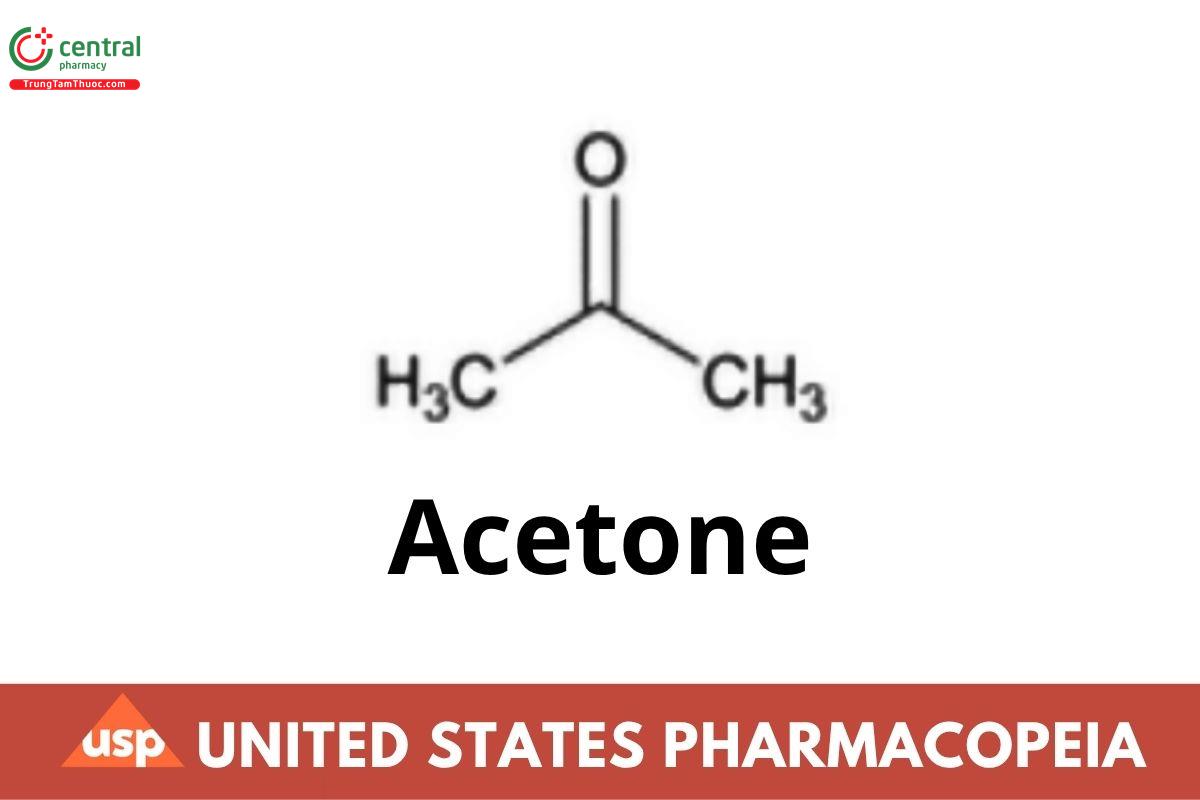
Acetone
If you find any inaccurate information, please let us know by providing your feedback here

Tóm tắt nội dung
This article is compiled based on the United States Pharmacopeia (USP) – 2025 Edition
Issued and maintained by the United States Pharmacopeial Convention (USP)
DOWNLOAD PDF HERE
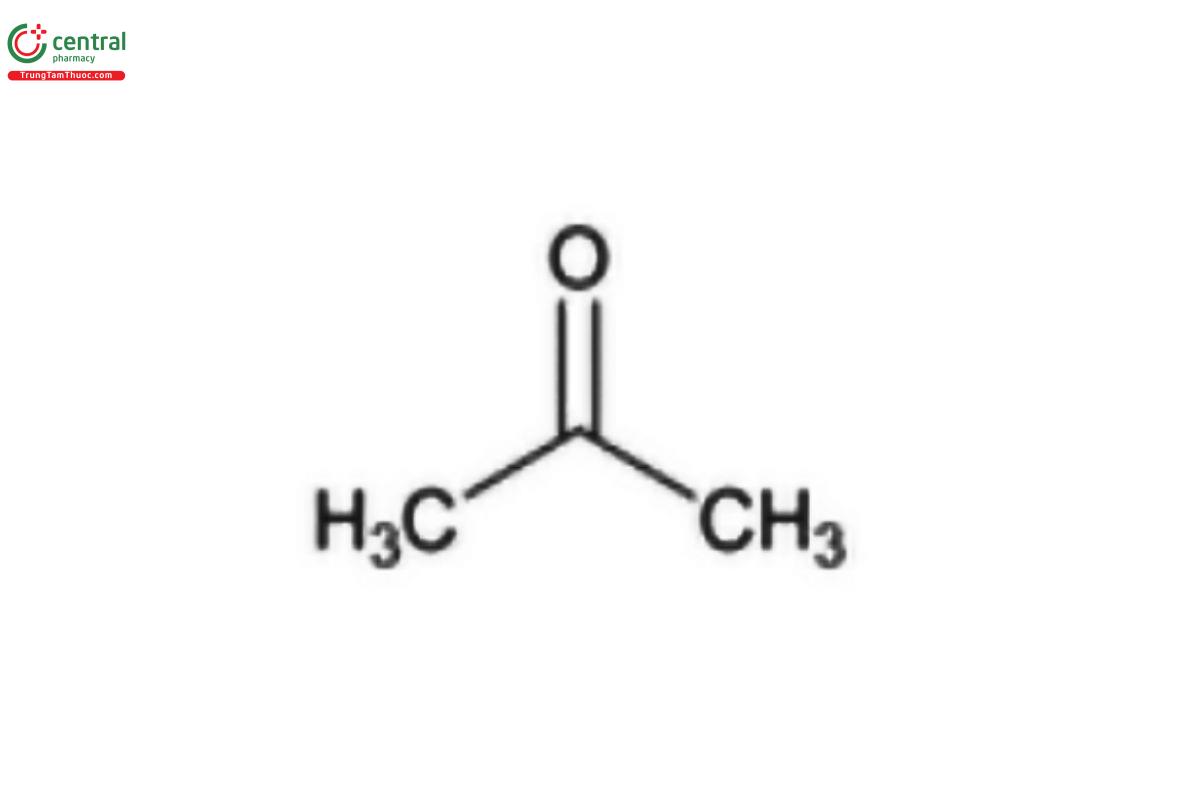
C3H6O 58.08
2-Propanone;
Acetone CAS RN®: 67-64-1.
1 DEFINITION
Acetone contains NLT 99.0% of C H O, calculated on the anhydrous basis.
[Caution—Acetone is very ammable. Do not use where it may be ignited.]
2 IDENTIFICATION
Change to read:
A. Spectroscopic Identification Tests 〈197〉, Infrared Spectroscopy: 197F (CN 1-May-2020)
B. The retention time of the Sample corresponds to that of USP Acetone RS, as obtained in the Assay.
3 ASSAY
Procedure
Sample: Acetone
System suitability solution: Dilute 1.0 mL of USP Methyl Alcohol RS and 1.0 mL of USP Acetone RS with tetrahydrofuran to 50 mL.
Chromatographic system (See Chromatography 〈621〉, System Suitability.)
Mode: GC
Detector: Flame ionization
Column: 0.32-mm × 30-m fused-silica capillary; 1.8-μm of phase G43
Temperature
Column: See Table 1.
Table 1
Initial Temperature (°) | Temperature Ramp (°/min) | Final Temperature (°) | Hold Time at Final Temperature (min) |
| 40 | 0 | 40 | 5 |
| 40 | 20 | 240 | - |
Injector: 200°
Detector: 280°
Carrier gas: Helium
Flow rate: 35 cm/s (linear velocity)
Split ratio: 400:1
Injection volume: 1 μL
System suitability
Sample: System suitability solution
[Note—The relative retention times for methyl alcohol, acetone, and tetrahydrofuran are about 0.6, 1.0, and 1.9, respectively.]
Suitability requirements
Resolution: NLT 15 between the methyl alcohol and acetone peaks
Analysis
Sample: Sample
Calculate the percentage of acetone (C3H6O) in the portion of Acetone taken:
Result = (rU/rT) × 100
rU = peak area due to the acetone peak in the Sample
rT = sum of the areas of all the peaks in the Sample
[Note—No separate correction is applied for water content, because water does not respond to the ame-ionization detector.]
Acceptance criteria: NLT 99.0% on the anhydrous basis
4 SPECIFIC TESTS
4.1 Specific Gravity 〈841〉: NMT 0.789
4.2 Nonvolatile Residue: Evaporate 50 mL in a tared porcelain dish on a steam bath, and dry at 105° for 1 h.
Acceptance criteria: The weight of the residue does not exceed 2 mg (0.004%).
4.3 Water
Sample: Acetone
Standard solution: Transfer 0.50 mL of water to a dry 100-mL volumetric ask, dilute with dehydrated isopropyl alcohol to volume, and mix.
Blank: Dehydrated isopropyl alcohol
Chromatographic system
(See Chromatography 〈621〉, System Suitability.)
Mode: GC
Detector: Thermal conductivity
Column: 0.32-mm × 50-m capillary; 5.0-μm layer of support S2
Temperature
Column: See Table 2.
Table 2
Initial Temperature (°) | Temperature Ramp (°/min) | Final Temperature (°) | Hold Time at Final Temperature (min) |
| 100 | 25 | 190 | - |
Injector: 250°
Detector: 250°
Carrier gas: Helium
Flow rate: 11 mL/min
Split ratio: 4.5:1
Injection size: 1.0 μL
Analysis
Samples: Acetone, Standard solution, and Blank
[Note—Identify the peaks based on their relative retention times, which are 1.0 for water and about 1.9 for isopropyl alcohol.]
Acceptance criteria: The area of the water peak for Acetone is NMT that from the Standard solution, corrected for the area of the water peak from the Blank (0.5%).
Readily Oxidizable Substances
Analysis: Mix 20 mL with 0.10 mL of 0.10 N potassium permanganate in a glass-stoppered bottle.
Acceptance criteria: The permanganate color of the mixture does not completely disappear within 15 min.
5 ADDITIONAL REQUIREMENTS
Packaging and Storage: Preserve in tight containers, remote from fire.
USP Reference Standards 〈11〉
USP Acetone RS
USP Methyl Alcohol RS

